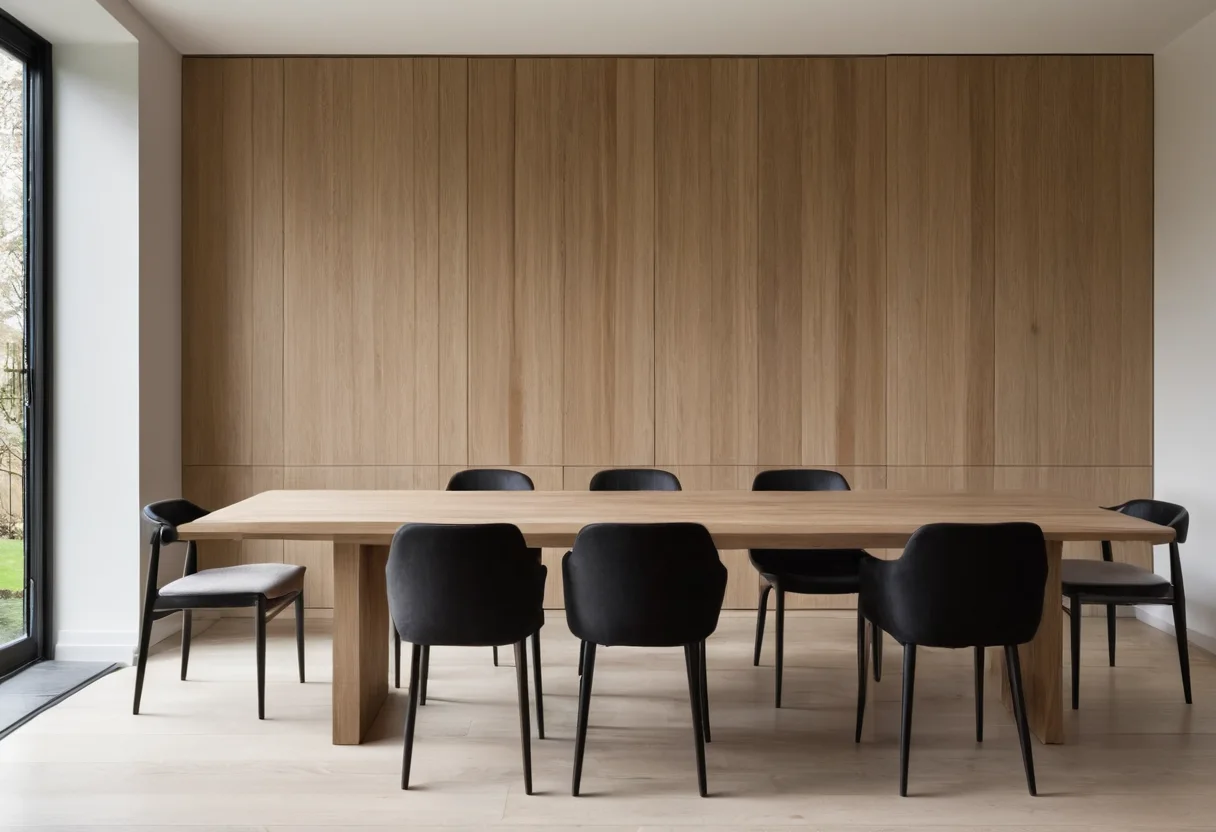
Timber does not need to match across a room. It needs a clear hierarchy of dominant, supporting and contrasting tones.
Start with the largest area
Flooring or built-in joinery usually sets the dominant undertone. Compare other samples against it under the project light, using the same large-sample discipline described for warm-white paint.
A near-match often looks accidental. Either relate the undertone clearly or create enough contrast to show intent. This material confidence is central to the quiet-luxury test.
Control grain and repetition
Large lively grain carries more visual weight than a fine straight veneer. Repeat each secondary tone at least once, perhaps in a frame, table or handle, while using balance rather than mirrored placement.
Let other materials mediate
Textile, paint and stone can bridge two woods. When stone is dominant, review the actual slab through the selection process before cutting. In bathrooms, keep timber use within the exposure limits of the material hierarchy.