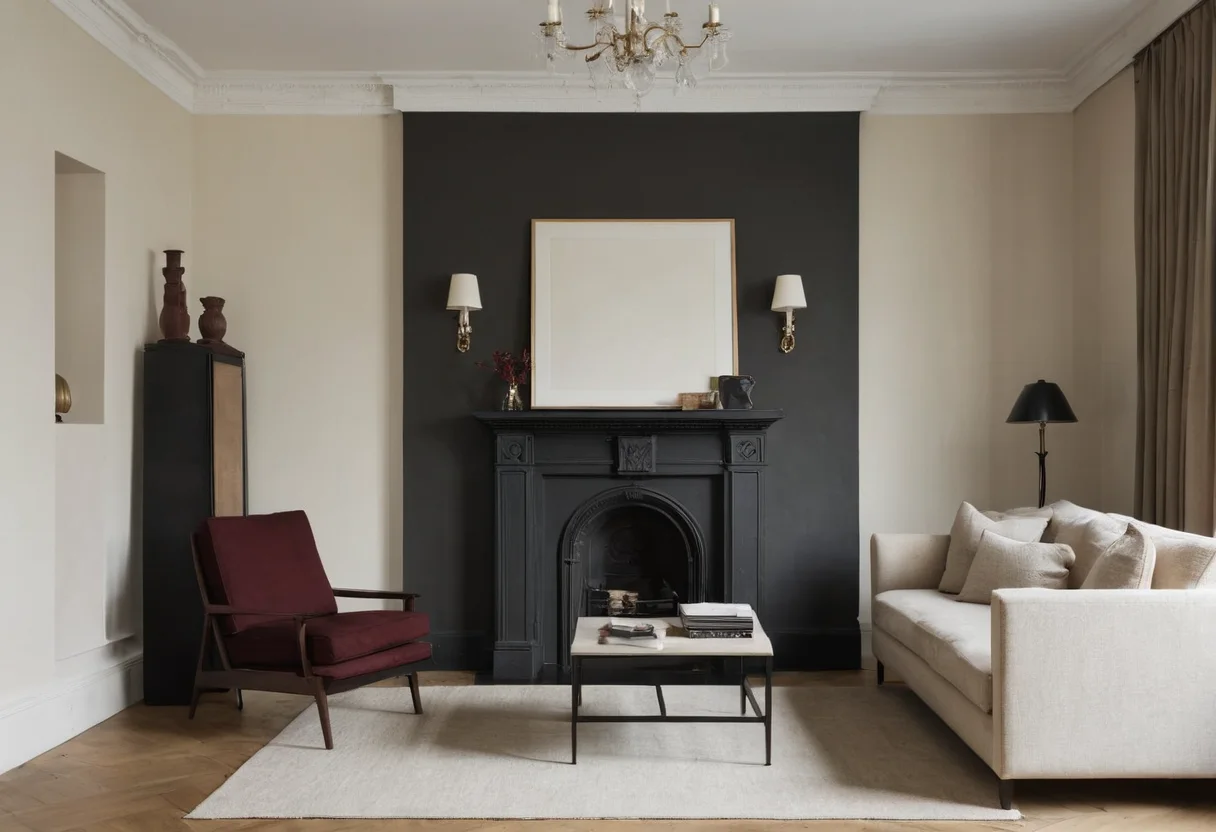
Symmetry repeats position around an axis. Balance distributes visual weight. A room can have one without the other, and forcing the first often damages the second.
Reduce the room to masses
Photograph the main view and ignore detail. Compare dark and light areas, tall and low objects, dense storage and open wall. The stripped-back view used in the quiet-luxury test makes visual weight easier to identify.
A large cabinet may balance several light chairs. Empty wall can balance timber grain; this is why an intentionally quiet wall is an active compositional element.
Use the body as a second test
A balanced photograph can still produce awkward movement. In living rooms, compare the masses with conversation and circulation. Around dining tables, preserve the occupied clearances in the full-scale dining test.
Repeat relationships, not objects
Shared height, colour or spacing can connect unequal pieces. When timber carries much of that weight, use undertone and repetition instead of searching for identical finishes.