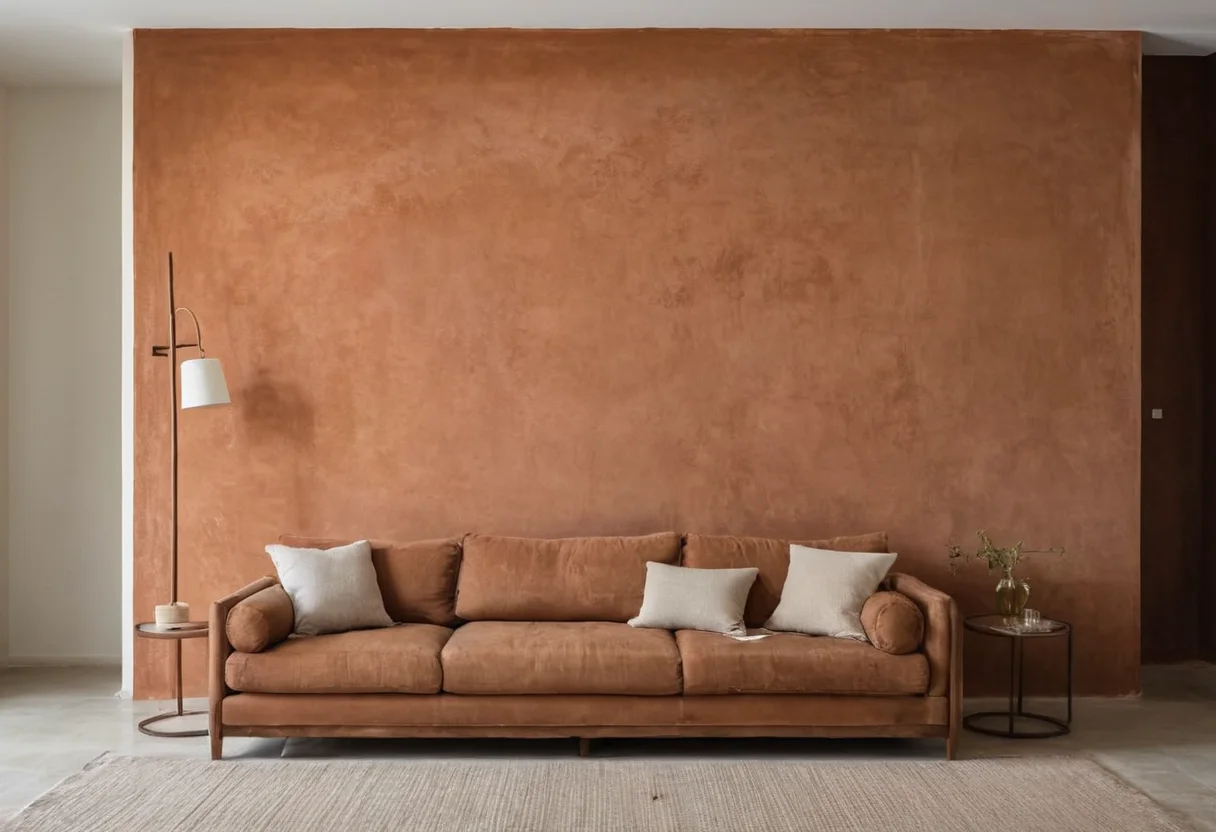
A blank wall is often treated as a missing decision. In a resolved room it can be the decision that allows daylight, furniture and art to remain distinct.
Count the active surfaces
Stand at the main entrance and list what already asks for attention: veined stone, timber grain, shelving, curtains, artwork and views. The stripped-back assessment in the quiet-luxury test makes this hierarchy easier to see.
If every elevation carries a material change, none can lead. A strong marble surface in particular needs visual distance; read how slabs are selected and composed before deciding what should sit beside it.
Use emptiness to balance weight
Open wall can balance a dense cabinet or dark sofa without becoming a mirror image. This is the central distinction in symmetry versus balance. The empty area has shape, proportion and a relationship to the furniture below it.
Let light provide the variation
Observe the wall over a full day. A surface crossed by changing daylight may need no panel, niche or paint block. Test its colour using large warm-white samples, then review the whole elevation for the quiet inconsistencies covered by the final alignment checklist.
Leaving a wall alone is not a refusal to design. It is a way to protect the hierarchy already present.