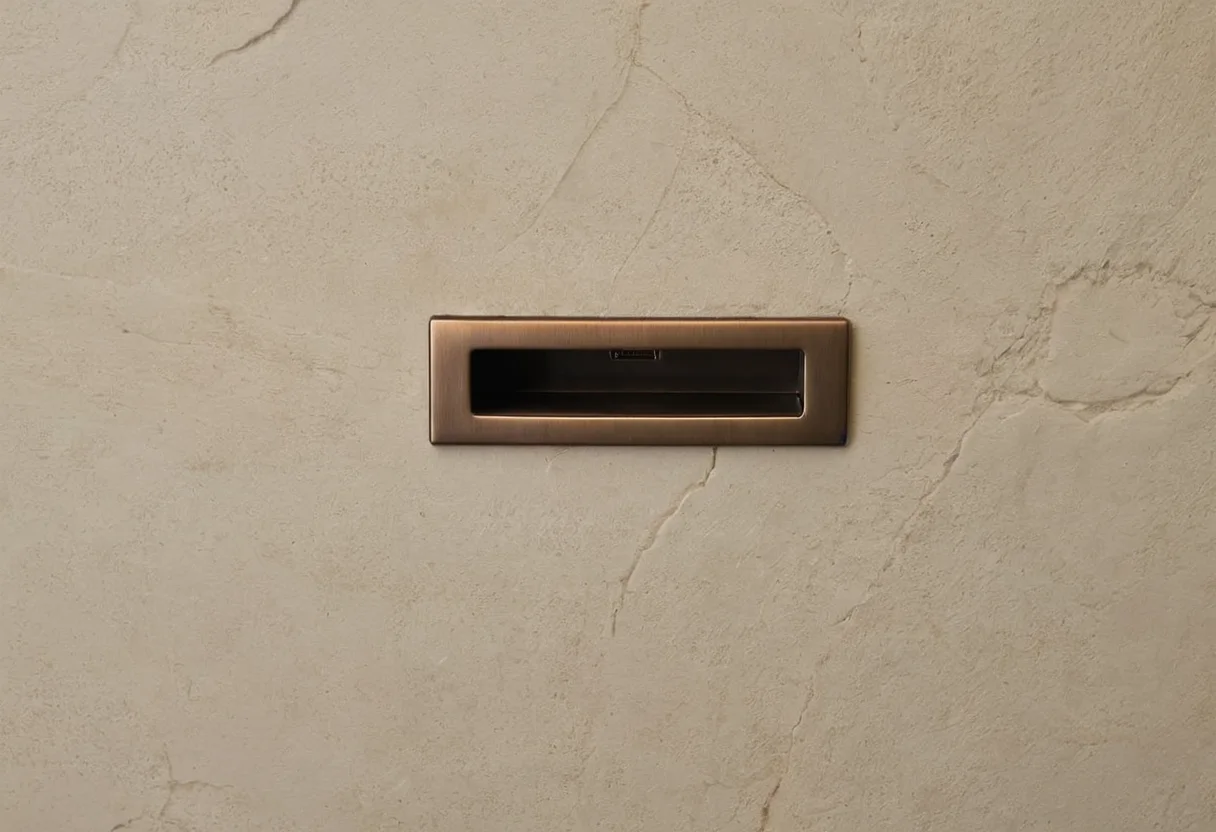
The last impression of an interior is built from socket heights, tile joints, handle lines and the places where two trades thought the other would finish.
Review elevations, not objects
Photograph each wall straight on and mark every broken control line. Curtain slots should relate to the geometry established in the curtain stack plan; bedside fittings should be checked from the low viewpoint in the pillow-level lighting review.
Concentrate on trade junctions
The most visible errors often occur where stone, joinery and electrical work meet. Review actual stone composition through the slab-selection sequence, then coordinate cuts before sockets are fixed. In bathrooms, compare joints with the technical zones in the material hierarchy.
Do not confuse alignment with symmetry
Technical devices can share a control line without being mirrored. Balance rather than automatic symmetry keeps the elevation ordered while respecting function.
Snagging should correct visible drift before styling hides it. Precision matters most when it lets the room feel uneventful.