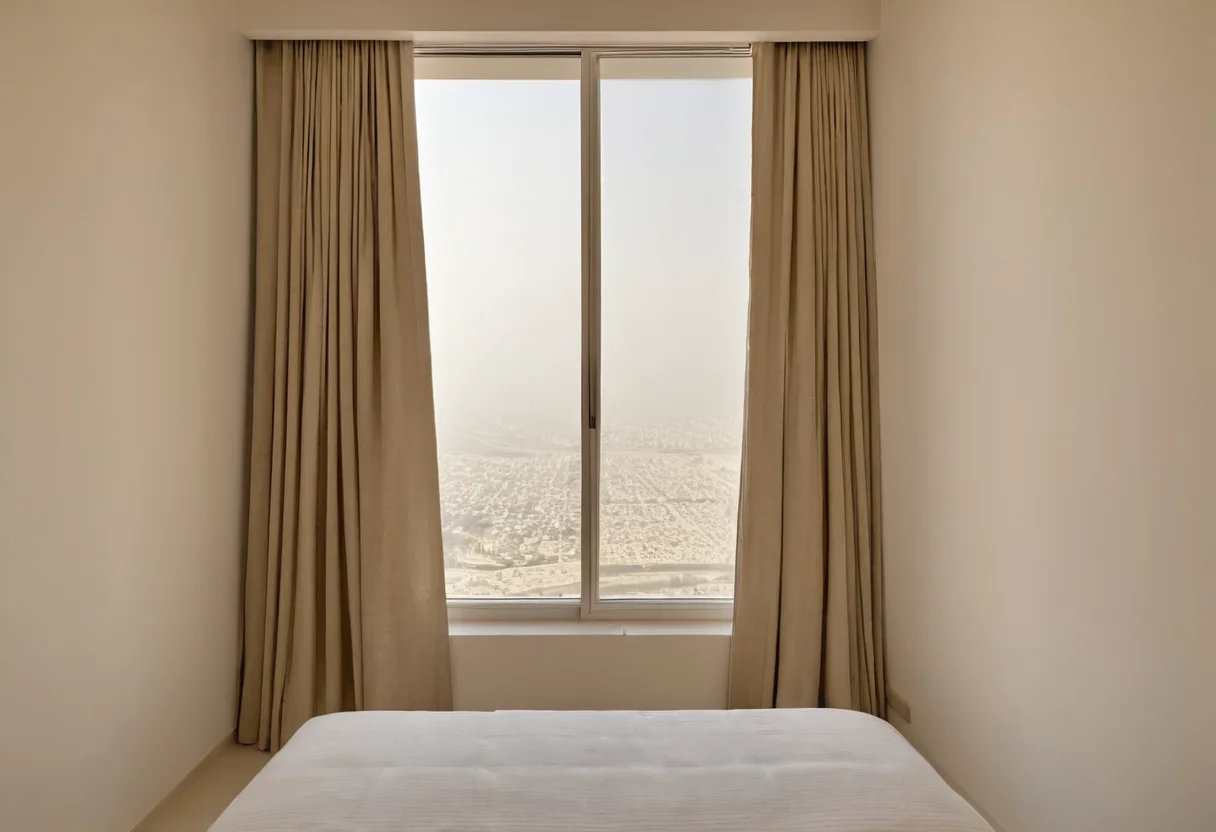
Curtain fabric is the visible choice, but track position, stack-back and finished drop determine whether the window feels larger or smaller. Those dimensions must be fixed before the textile is ordered.
Reserve the parked curtain
Measure how much width the heading and fabric consume when fully open. If the stack covers glazing, daylight and view are reduced every day. In a living room, that loss can also force furniture inward and disturb the conversation plan.
Check handles, floor vents and low cabinets throughout the curtain movement. Air supply is particularly important: the grille placement rules in designing around air-conditioning prevent fabric from billowing or blocking circulation.
Set the architectural line
A recessed track can make the room feel taller, but only if the ceiling void and access are coordinated. Align the slot with adjacent joinery and wall returns; repeated offsets should pass the final-ten-percent alignment review.
Choose fabric for the geometry
Weight, lining and heading affect both stack and drop. Test the chosen warm white against the fabric under daylight and lamps using the method in our paint-testing guide. If a rug occupies the same composition, verify its boundary through the large-rug measurement test before finalising the lower visual line.
Successful curtains do not call attention to their mechanics. They reveal the whole window when open and establish one clean plane when closed.