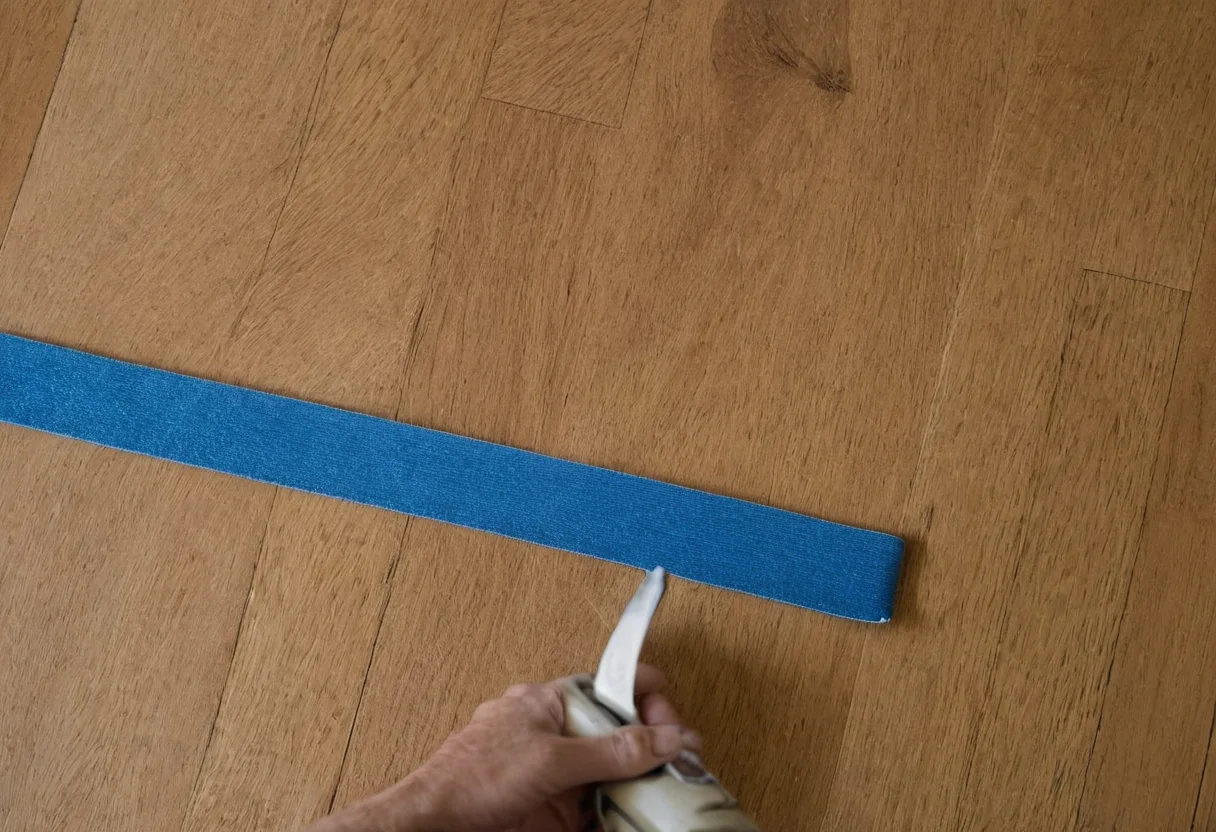
A rug is not a picture placed on the floor. It establishes the boundary of a furniture group and changes how people cross the room.
Fix furniture first
Mark every furniture foot that should sit on the rug. In a living room, begin with the conversation arrangement; in a dining room, include the pulled-back chairs from the clearance test.
Compare the exposed floor border on all sides. An almost-correct standard size often looks less deliberate than a clearly smaller or properly larger choice.
Open the room
Test doors, low cabinets and curtain movement over the proposed pile. Curtain geometry should already be resolved through the stack-back calculation. In an entry route, make sure the rug does not interfere with the storage and standing zones described in the entry-hall plan.
Review colour at full scale
Place the largest available sample beside upholstery and timber. The undertone logic in mixing timber tones helps distinguish a deliberate contrast from a near-match.
Order only after the taped boundary has survived movement, door operation and the complete furniture plan.