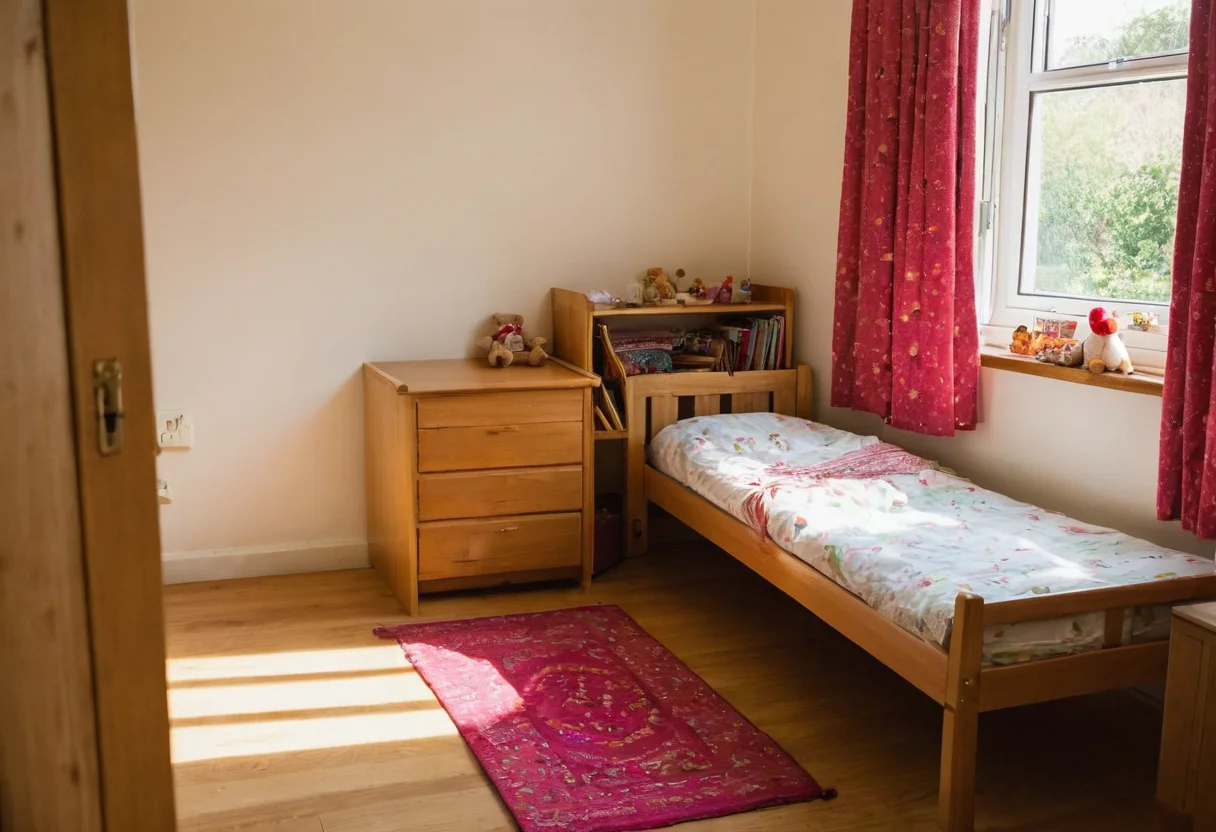
A child’s interests change faster than walls, wardrobes and electrical work. The permanent room should anticipate adult dimensions while allowing colour and identity to remain easy to replace.
Separate five-year and fifteen-year decisions
Reserve a full-size bed, useful desk and clear route even if smaller furniture is used now. This body-led planning resembles choosing seating through posture: dimensions serve a user, not an age label.
Provide reachable storage today and higher storage for later. The object inventory behind effective entry storage helps divide daily items from seasonal or supervised ones.
Make change inexpensive
Express age through bedding, art and freestanding objects rather than themed joinery. One calm surface, as argued in The Case for One Unfinished Wall, creates room for those changing layers.
Plan light and air for the future layout
Set desk light, bedside controls and charging for the larger furniture position, drawing on the pillow-level lighting test. Coordinate grilles and access through the air-conditioning guide.
Longevity does not make a child’s room bland. It makes the next version possible without demolition.