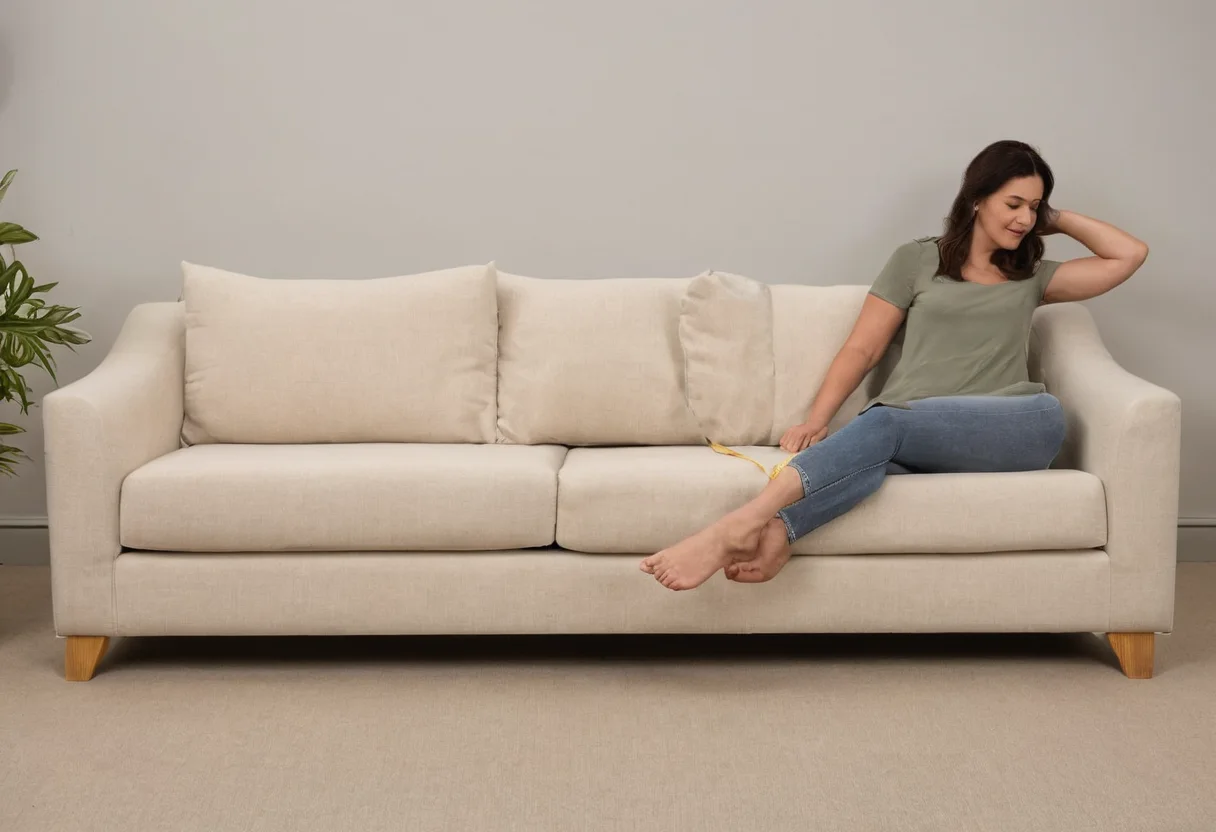
A sofa can be well made and completely wrong for its owner. Comfort depends on the match between seat depth, back angle, cushion behaviour and the posture used most often.
Name the posture
Upright conversation needs a different seat from reading with legs raised or lying across the cushions. Sit for ten minutes, not ten seconds. The body-first method is also central to planning bedside light from the pillow.
Check whether feet rest naturally, the lower back is supported and standing up does not require pushing against a table. Once the posture works, confirm that the sofa supports the living room’s conversation geometry rather than blocking its routes.
Measure the room with the sofa in use
Include projecting arms, recline and loose cushions in the footprint. Mark the coffee table and side tables at the same time. A rug should connect the group without forcing a smaller sofa; follow the large-rug measurement sequence after furniture positions are stable.
Judge material in context
View upholstery beside the dominant timber and stone. Our guide to mixing timber tones helps prevent near-matches, while the quiet-luxury test asks whether the room still works when decorative cushions are removed.
The right sofa is not the deepest or softest. It is the one that makes the preferred posture feel unremarkably natural.