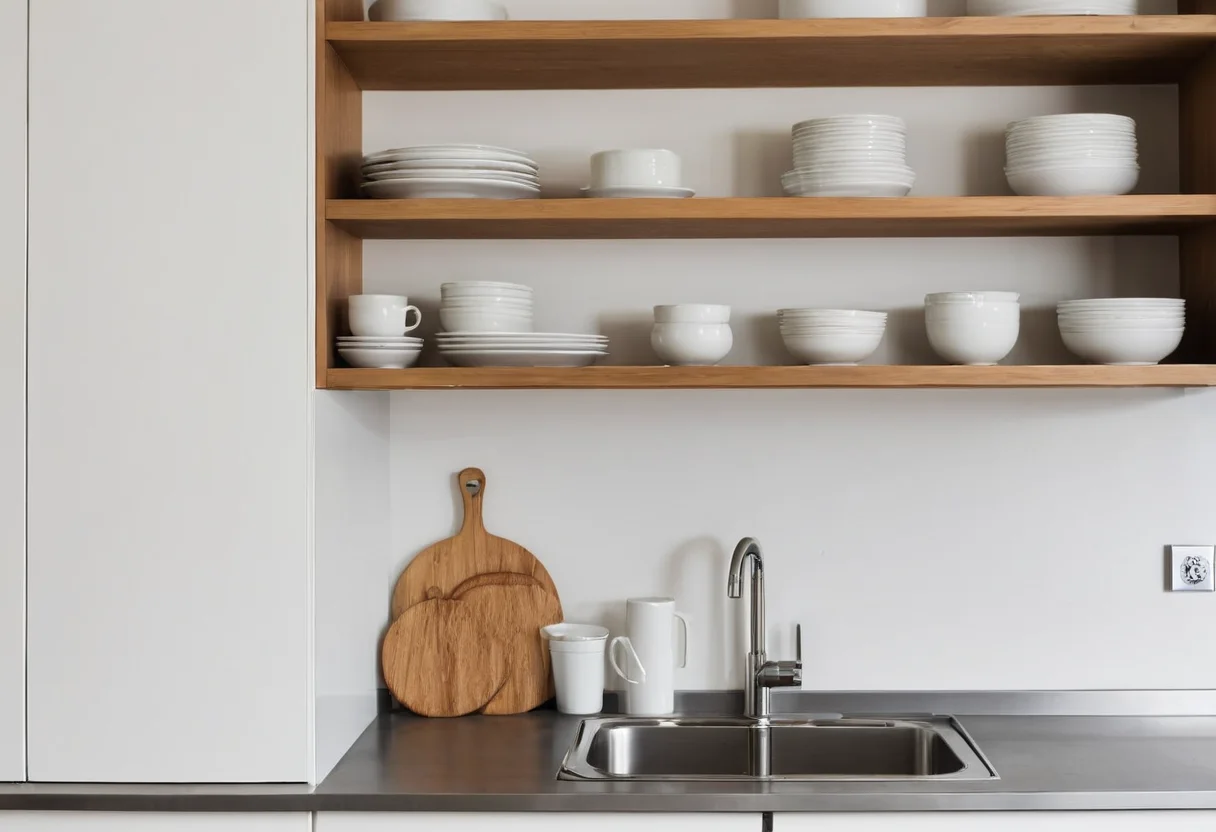
Open shelves are drawn as clean horizontal lines and photographed with a handful of objects. In use, they collect dust, cables, books of unequal height and everything that lacked a better address.
Separate display from storage
Count the items that genuinely deserve continuous display. Daily clutter belongs behind a door; meaningful objects need breathing room. The arrival inventory used for entry-hall storage is a useful model because it begins with object dimensions rather than an elevation.
Open sections work best as interruptions within closed joinery. This also protects the negative space discussed in The Case for One Unfinished Wall; a whole elevation should not become an obligation to style.
Design for a cleaning hand
- Leave enough height to lift objects without tilting them.
- Avoid deep shelves where the rear surface cannot be reached.
- Keep textured finishes away from cooking grease and strong supply-air paths.
Airflow and service access should be checked with the same care used in air-conditioning coordination. Shelf lighting needs removable drivers and a beam that does not expose dust; the low-glare viewpoint from bedside lighting tests applies here too.
Finish the edges
Because shelves repeat, small variations in thickness and joint position multiply. Use the straight-on photographic review in the final alignment checklist before accepting the installation.